OnAir Post: January 2023 News
About South Korea
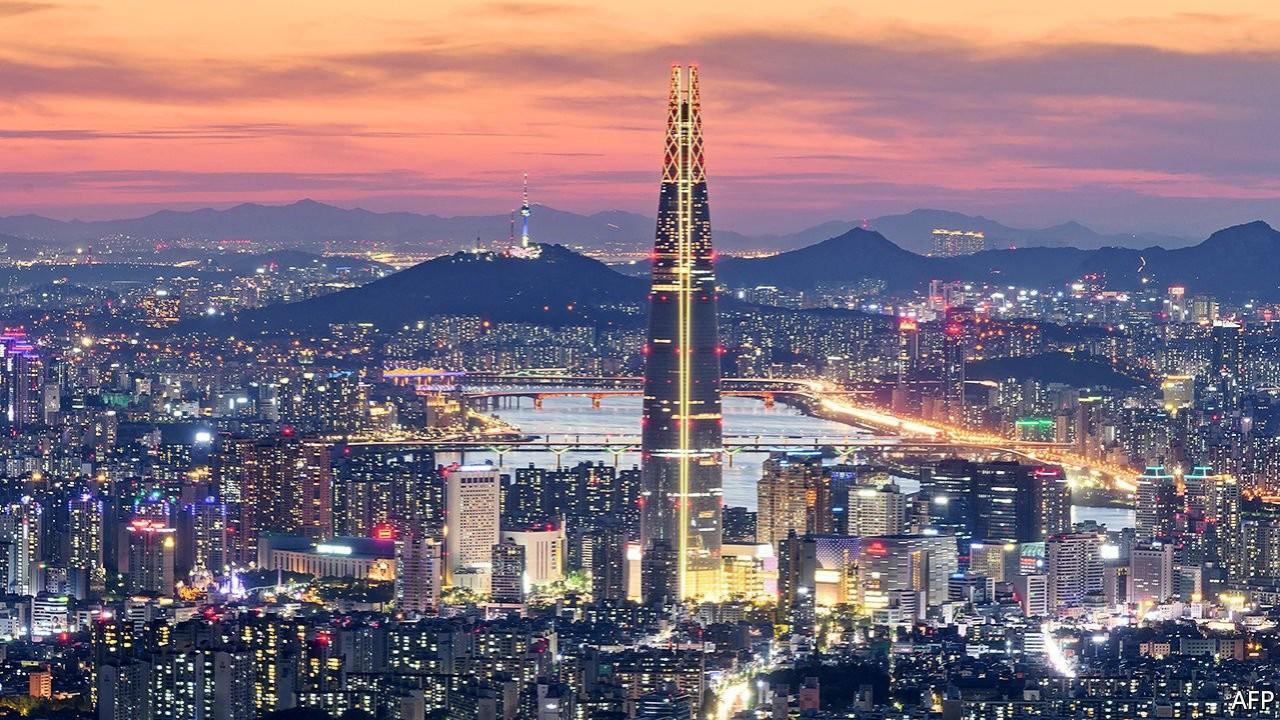
South Korea, officially the Republic of Korea (ROK), is a country in East Asia. It constitutes the southern part of the Korean Peninsula and shares a land border with North Korea. The country’s western border is formed by the Yellow Sea, while its eastern border is defined by the Sea of Japan. South Korea claims to be the sole legitimate government of the entire peninsula and adjacent islands. It has a population of 51.75 million, of which roughly half live in the Seoul Capital Area, the fourth most populous metropolitan area in the world. Other major cities include Incheon, Busan, and Daegu.
South Korea is a middle power and a highly developed country, with its economy being ranked as the world’s thirteenth-largest by nominal GDP and the fourteenth-largest by GDP (PPP). It ranks nineteenth globally by Human Development Index, and has the third-highest life expectancy in the world. In recent years, the country has been facing an aging population and the lowest fertility rate in the world. South Korea’s citizens enjoy one of the world’s fastest Internet connection speeds and the densest high-speed railway network. The country is the world’s ninth-largest exporter and ninth-largest importer. Its armed forces are ranked as one of the world’s strongest militaries, with the world’s second-largest standing army by military and paramilitary personnel. Since the 21st century, South Korea has been renowned for its globally influential pop culture, particularly in music (K-pop), TV dramas (K-dramas) and cinema, a phenomenon referred to as the Korean wave.[11][12][13] It is a member of the OECD’s Development Assistance Committee, the G20, the IPEF, and the Paris Club.
Source: Wikipedia
OnAir Post: About South Korea
South Korea & Democracy
Summary
The politics of the Republic of Korea take place in the framework of a presidential representative democratic republic, whereby the president is the head of state, and of a multi-party system. The government exercises executive power and legislative power is vested in both the government and the National Assembly. The judiciary is independent of the executive and the legislature and comprises a Supreme Court, appellate courts, and a Constitutional Court. Since 1948, the constitution has undergone five major revisions, each signifying a new republic. The current Sixth Republic began with the last major constitutional revision in 1987.
The Economist Intelligence Unit rated South Korea a “full democracy” in 2020.
Source: Wikipedia
OnAir Post: South Korea & Democracy